
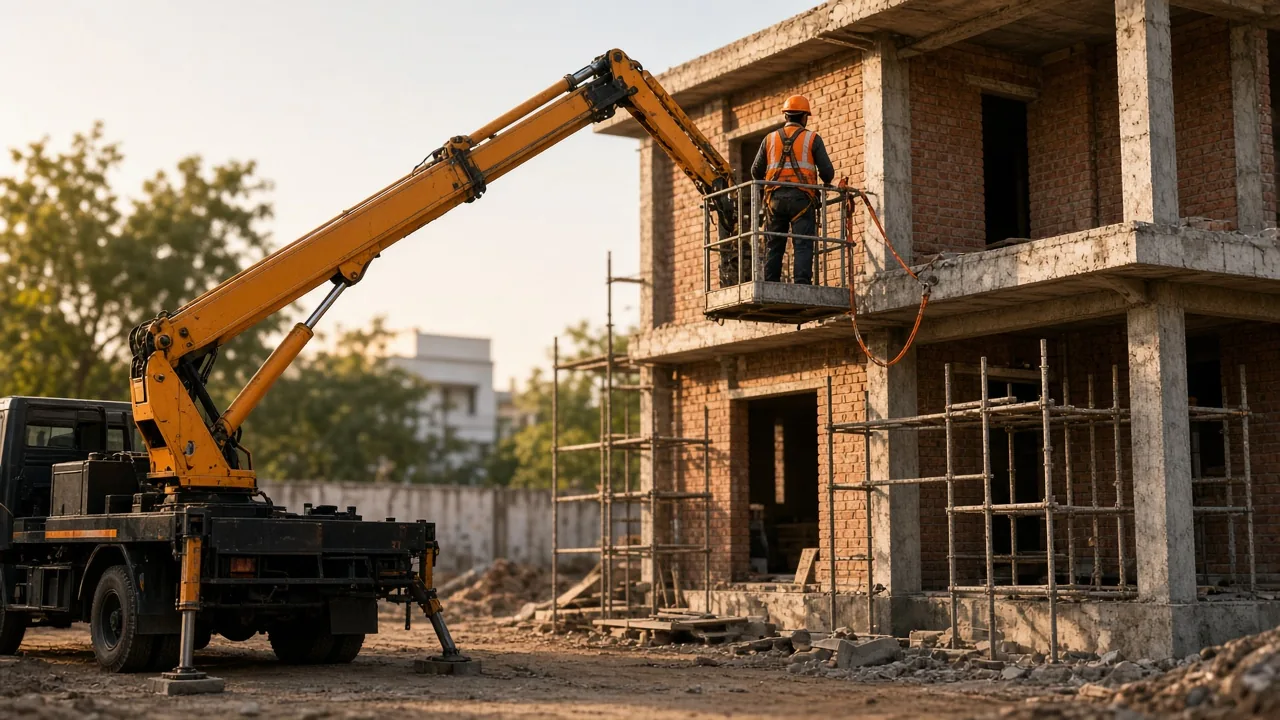
Improve Boom Aerial Lift Safety with Proper Harness Systems
Workers at job sites involving work at height are often at higher risk of injuries and accidents. Some incidents can prove fatal. While truck-mounted boom lifts have greatly minimized these troubles due to their advanced features, worker training and guidance on the use of harness systems may go a long way toward reducing workplace hazards and improving productivity.
The booms may experience sudden jerks if the work platform collides with an obstacle or if its leveling system fails. Plus, work at significant heights is often unpredictable. One misstep, and workers' lives will be jeopardized. Due to these reasons, learning about harness systems is important. Here are some insights on this.
Essential Components of Harness Systems
OSHA and ANSI mandate that businesses take full responsibility for worker safety. When workers use boom lifts, they must wear properly fitted harnesses with lanyards to help prevent fall hazards. Failing to adhere to these basic requirements may result in significant penalties. Both the company and the responsible officers can be subjected to heavy fines. So, choose the right harness system for your boom lift.
| Component | What it must do |
|---|---|
| Full-body harness | Compliant with safety regulations. Distributes fall impact across the pelvis, thighs, and shoulders instead of concentrating it on the waist. |
| Adjustable lanyard | Keeps the worker connected to the platform. Length must match the aerial work platform's size so the worker cannot be ejected over the rails. |
| Designated anchor point | Factory-rated point, usually near the platform floor, strong enough to withstand the force of a fall arrest. |
| Sturdy guardrails | Reduce ejection risk during a collision or sudden jerk. Work together with the harness — they do not replace it. |
Firstly, a full-body harness is required. It must be compliant with safety regulations. A harness can help protect individuals from serious injuries during a fall. It can help reduce the impact on the pelvis, thighs, and shoulders. The lanyard should be adjustable and help keep the worker connected to the platform. Selecting the appropriate lanyard length is important. For this, you need to consider the aerial work platform's size.
Designated Anchor Points on the Platform
Well-designed and compliant aerial lift platforms will have designated anchor points. Generally, these anchor points are found near the platform floor. These must be strong enough to withstand the force caused during fall arrest.
Never clip to a guardrail, tool tray, or a convenient-looking weld. Only the manufacturer's designated anchor point is rated for fall arrest. If a rented machine has a damaged, missing, or unmarked anchor, do not send anyone up until it is replaced or the unit is swapped.
Our turnkey teams specify equipment, safety procedure, and a single point of contact from excavation to handover.
Additional Considerations
Arranging for a harness system is a must. However, you must also ensure that the aerial lift's guardrails are sturdy. They are necessary safety features that help minimize the risk of ejection during platform collisions or sudden, jerky movements. When combined with harness systems, these safety features provide even greater protection.
Some may wonder if harness systems will hamper their mobility. It all depends on selecting the correct fit and length of the harness and lanyard. They will not hinder easy movement and will ensure maximum safety. Make sure workers don't let these go, even for shorter work durations. Boom lifts are used for elevated access, and working at height is always unpredictable. Hence, it can be a mistake to take any situation or safety feature for granted.
Unclipping “just for a minute” on a short job.
Most falls from boom lifts happen during ordinary work, not during an obvious emergency. Keep the harness on and the lanyard clipped for the entire time anyone is in the platform — including setup, tool handover, and the last two minutes before descent.
Have a Rescue Plan Before Anyone Goes Up
Accidents can still occur when working with boom lifts at height. To tackle those situations, every business should have a rescue plan. It should discuss safe platform-lowering methods using ground controls, alternative retrieval options when primary safety features fail, emergency service contact numbers, medical assistance for suspended workers, and more.
| Rescue plan item | Why it is on the list |
|---|---|
| Ground-control lowering | A trained person on the ground can bring the platform down if the operator is incapacitated. |
| Backup retrieval method | Needed when the primary lowering system or engine will not respond. |
| Emergency numbers | Site supervisor, ambulance, and local emergency services — written, not remembered. |
| Suspended-worker medical aid | A worker hanging in a harness after a fall needs prompt medical attention, not a wait-and-see approach. |
Nevertheless, boom lifts have made elevated work easier and much safer. While harness systems enhance their safety, you should hire equipment that is sturdy, functional, reliable, and advanced. They should have excellent features and functionalities in place. At Blade Platforms, you can discover such models.
Ask these questions before you sign — including how the crew works at height on your plot.