Labour Cost for House Construction in Chennai in 2026 — Real Rates, Stage-Wise Breakdown & Zero Guesswork
You've got three contractor quotes on the table and the labour numbers don't match. None of them can clearly explain what's actually included in that "labour" line.
Here's the direct answer: workmanship cost for house construction in Chennai runs ₹350–₹550 per sq ft in 2026, depending on finish level and contract type. For a 1,500 sq ft house, that's roughly ₹5.25–₹8.25 lakhs in labour alone, excluding materials. Rates shift by locality, contract type, and how many floors you're building.
Having priced 400+ completed homes across Chennai, we've seen exactly where these numbers inflate. This guide covers the stage-wise cost breakdown, daily trade wages, contract types, and how to keep your costs honest.
What Is the Labour Cost Per Sq Ft in Chennai?
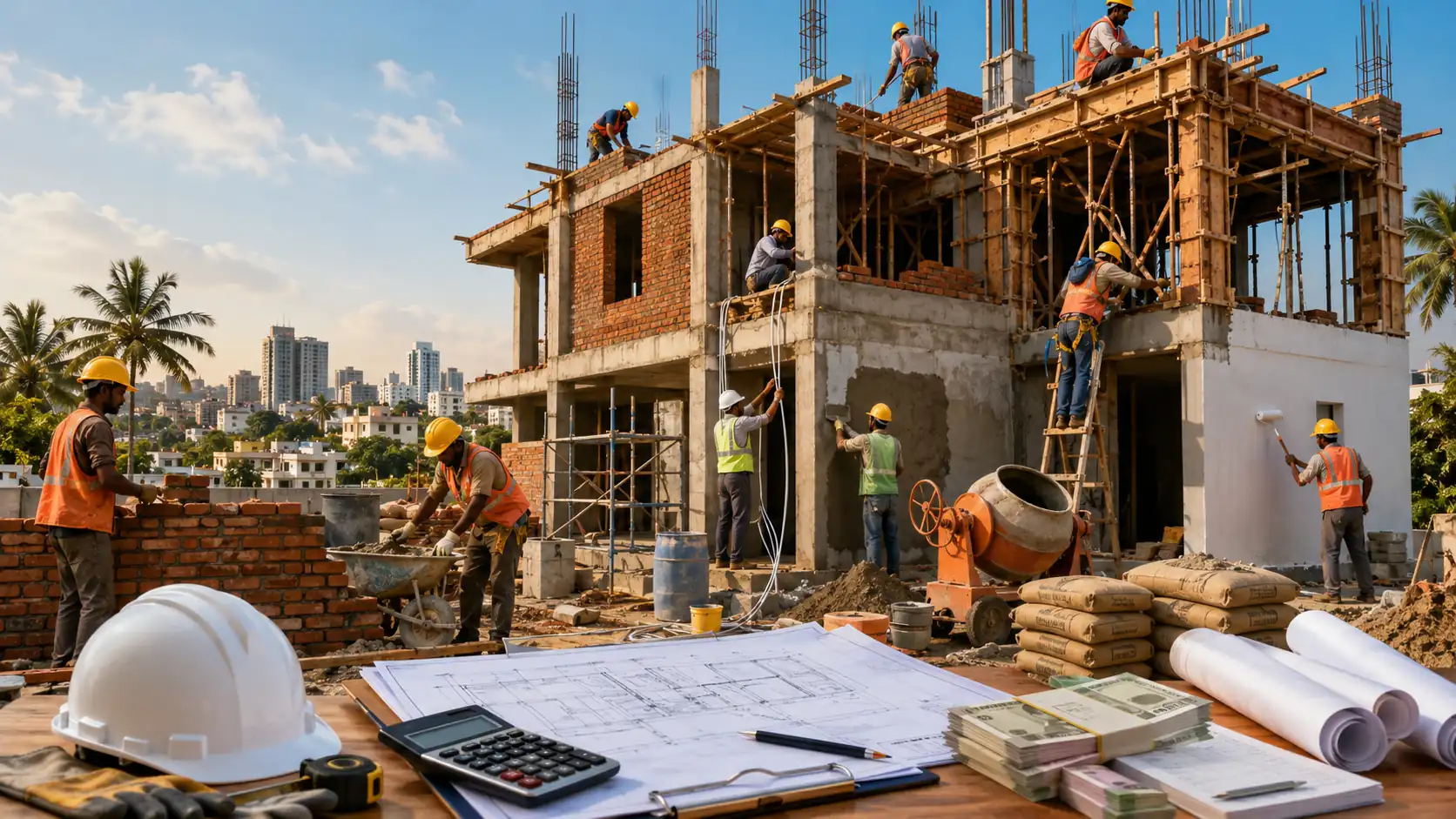
This figure covers workmanship — masons, carpenters, electricians, plumbers, and helpers — but not materials like TMT bars, M-Sand, or cement. Workmanship charges typically make up 25–40% of total construction cost, with the rest going to materials, contractor margin, and site overheads.
Labour Rate by Finish Grade
| Finish Grade | Labour Rate (₹/sqft) | Typical Use Case |
|---|---|---|
| Basic | ₹350–₹400 | Rental homes, budget builds |
| Standard Most Common | ₹400–₹480 | Most owner-occupied Chennai homes |
| Premium | ₹480–₹550+ | Duplexes, detailed interiors, imported fittings |
Here's the thing — a headline rate like "₹1,999/sqft" from a builder should already fold labour into a single, itemized number. That's exactly how HireAndBuild structures its starting package, so you're not left doing separate labour math on top of a material quote.
Get a free house construction quoteWhat Does "Labour Cost" Actually Include and Exclude?
This distinction trips up a lot of first-time builders. When a contractor quotes ₹400/sq ft "for labour," that's separate from the ₹1,200–₹1,800/sq ft you'll spend on materials. Chennai homeowners often ask us why two quotes look so different — usually it's because one bundles material cost into the "labour" line and the other doesn't.
- Mason wages & carpentry
- RCC shuttering labour
- Plastering labour
- Electrical & plumbing fitment
- Site supervision (in some quotes)
- TMT bars & M-Sand
- AAC blocks & cement
- Tiles, paint, sanitaryware
- Contractor profit margin
Always ask a contractor to itemize labour and material separately, even in a turnkey quote — it's the fastest way to spot inflated pricing.
How Does Labour Cost Break Down Stage by Stage?
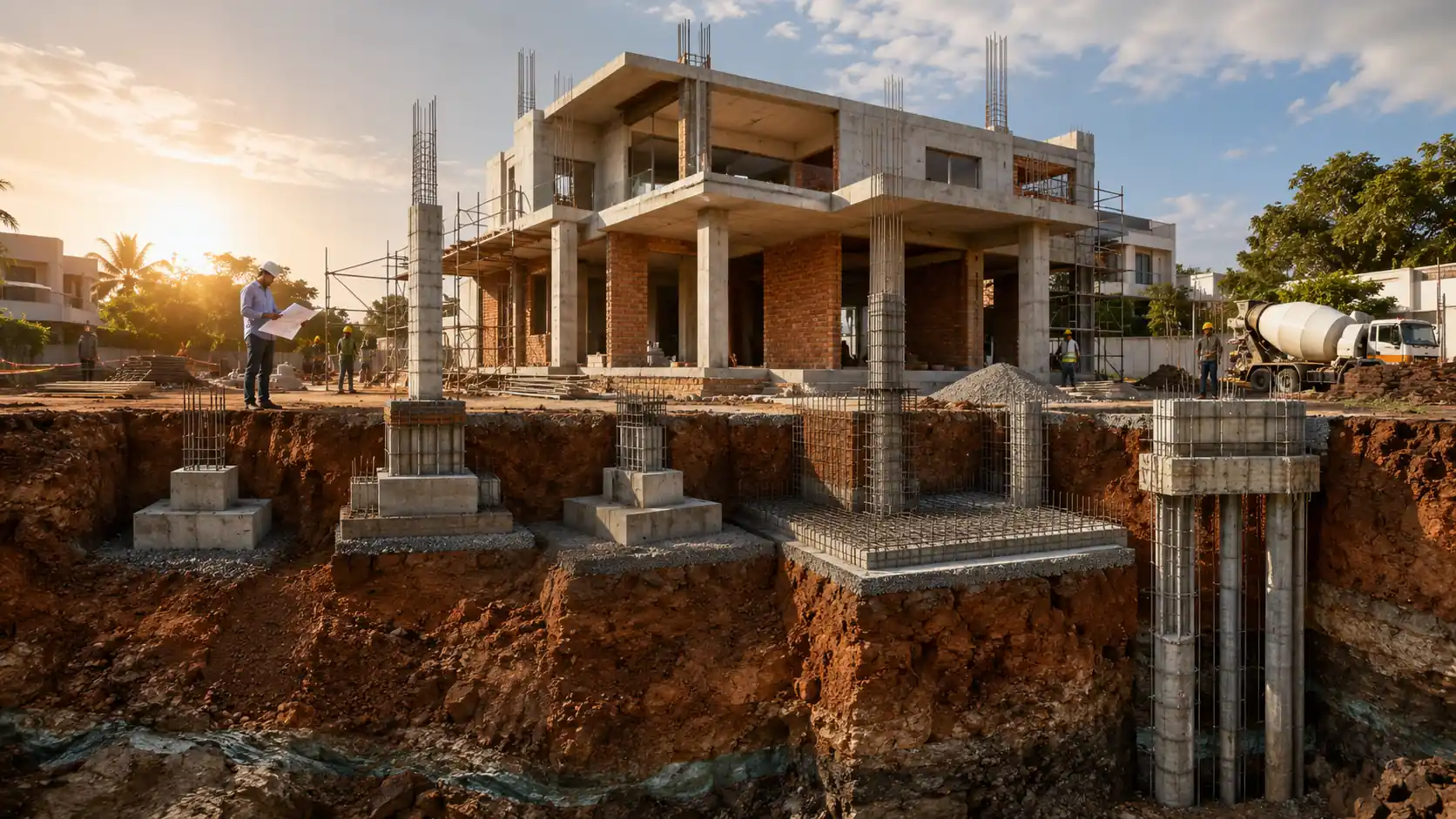
In our projects, we've found that homeowners rarely realize how front-loaded skilled labour is. Excavation and footing use mostly unskilled helper labour, while the RCC frame demands your most experienced — and most expensive — tradespeople.
Stage-Wise Workmanship Breakdown (1,500 sq ft house)
| Stage | Share of Spend | Key Trades Involved |
|---|---|---|
| Excavation & Footing (incl. PCC) | 8–10% | Helpers, mason |
| RCC Structure Largest Share | 28–32% | Mason, shuttering carpenter, bar bender |
| Brickwork / Masonry | 16–18% | Mason, helper |
| Plastering | 10–12% | Mason (finishing specialist) |
| Electrical & Plumbing Fitment | 10–12% | Electrician, plumber |
| Flooring | 10–12% | Tile mason |
| Painting & Finishing | 8–10% | Painter, carpenter |
Notice the RCC stage alone can eat nearly a third of your entire labour budget — this is exactly where using an inexperienced or underpriced crew tends to backfire structurally, since footing and slab work are the hardest to fix after the fact.
Planning to build in Chennai? Talk to our experts — free consultationWhat Do Masons, Carpenters, Electricians and Plumbers Charge Per Day?
From 1 October 2026 the central minimum wage for construction and maintenance of buildings was revised. Chennai is Area A. The figures below are the legal floor for work covered by that central schedule. They are not a private mason’s asking rate, and they are not a new per-sq-ft contract price.
The ₹350–₹550 per sq ft bands on this page are the 2026 workmanship planning ranges from our Chennai projects. No separate October survey of contract labour per sq ft was published, so those bands are unchanged. What changed on 1 October is the daily floor in this table.
| Category | Minimum per day, Area A, from 1 Oct 2026 |
|---|---|
| Unskilled helper | ₹840 |
| Semi-skilled / unskilled supervisory | ₹933 |
| Skilled (mason, carpenter, electrician, plumber floor) | ₹1,024 |
| Highly skilled | ₹1,111 |
Source: Labour Bureau, Ministry of Labour and Employment, VDA order dated 30 September 2026, effective 1 October 2026 (Area A totals reported by Mint, 5 October 2026). Unskilled is basic ₹523 plus VDA ₹317. Highly skilled is basic ₹693 plus VDA ₹418. The order does not split mason, carpenter, electrician and plumber into different rates — those trades sit in the skilled category unless the worker is classed as highly skilled. A site bargain can be higher than the floor. Tamil Nadu’s own minimum-wage notification is a separate schedule; the Chennai Collector’s 2026–27 rates run from 1 April 2026 to 31 March 2027 and were not revised again on 1 October.
Labour-Only vs Piece-Rate vs Turnkey — Which Should You Choose?
How the Three Contract Types Compare
| Contract Type | Who Buys Materials | Best For | Trade-off |
|---|---|---|---|
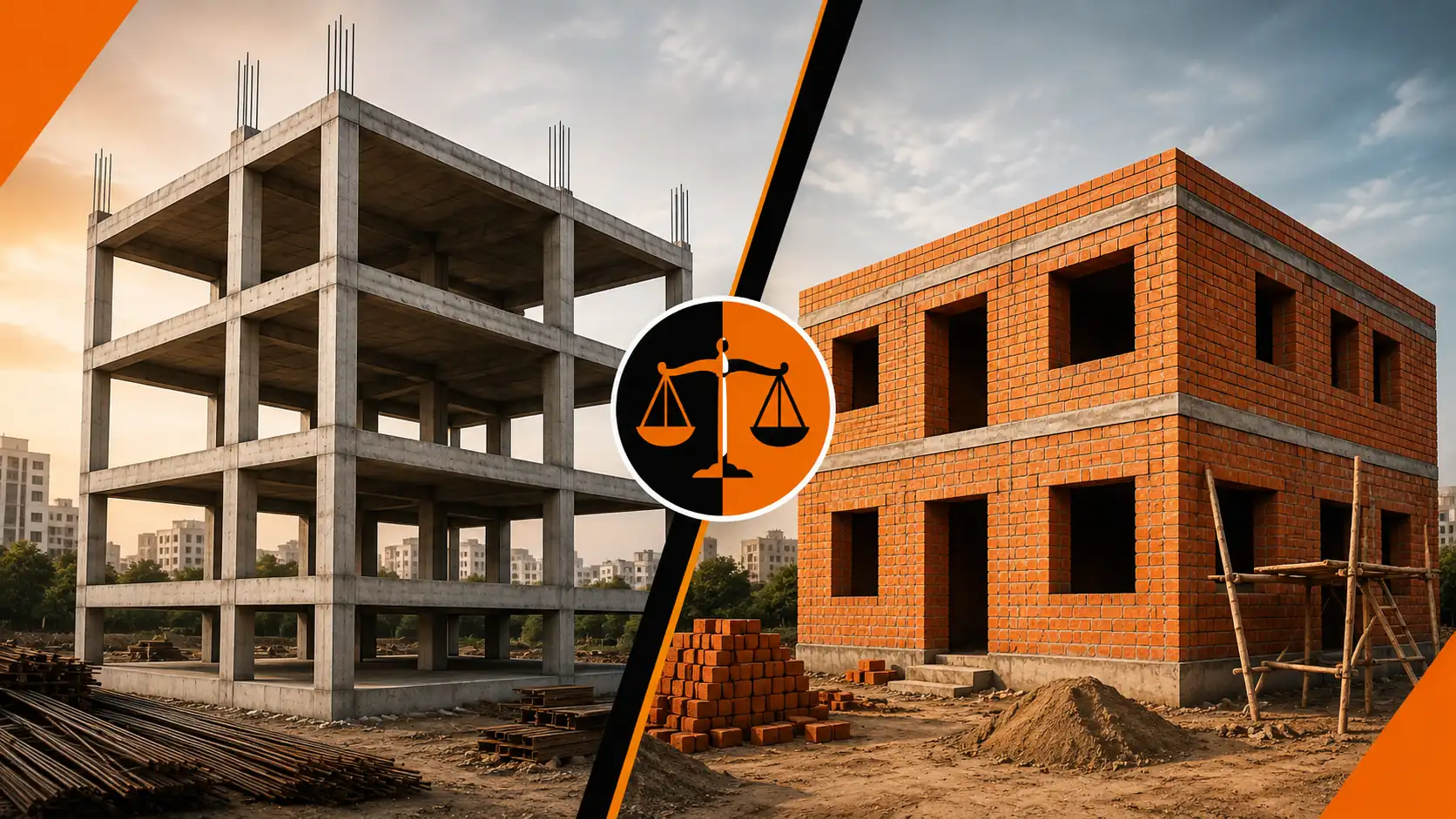
| Labour-Only | You | Owners with time to manage sourcing | Lower cost, higher effort and risk |
| Piece-Rate | Varies | Small, well-defined work packages | Hard to compare quotes apples-to-apples |
| Turnkey Recommended | Builder | First-time builders, working professionals | Slightly higher rate, single-point accountability |
For most first-time Chennai homeowners, we recommend turnkey — the modest premium over labour-only usually costs less than the material-price mistakes and delays that come from self-managing procurement.
Does Workmanship Pricing Vary Across Chennai Localities?
Narrow streets and limited parking in T. Nagar, Adyar, and Anna Nagar slow down material handling and reduce how many jobs a crew can run per week, which pushes up their effective day rate. Kolathur, Porur, and Ambattur sit in a middle band — decent connectivity without the core-city premium.
| Zone | Key Areas | Labour Premium | Key Driver |
|---|---|---|---|
| Core City | T. Nagar, Adyar, Anna Nagar | +10–20% | Site access, parking restrictions |
| Mid-Zone | Kolathur, Porur, Ambattur, Perambur | Citywide average | Good connectivity, no access premium |
| Outer Suburbs | OMR, Sholinganallur | −5–10% | Lower demand, though travel time affects crew reliability |
How Can You Control Labour Spend Without Compromising Quality?
What most contractors won't tell you is that mid-build design changes are the single biggest driver of labour overruns — a moved wall or added bathroom after the RCC stage can trigger rework that costs far more than getting it right on paper first.
5-Step Labour Cost Control Checklist
- Finalize your floor plan before footing starts. Changes after RCC work begins are the costliest to absorb.
- Avoid peak season if your timeline allows it. Starting just after monsoon can mean 10–15% lower skilled-trade wages.
- Insist on stage-wise billing, not lump-sum. You pay for completed work, not projected work.
- Don't cut corners on RCC, plumbing, or electrical trades. These are the hardest and most expensive stages to fix later.
- Get a written, itemized labour breakdown upfront. This is what protects you from mid-project "extra labour" charges.
In our experience, homeowners who insist on this level of transparency from day one rarely face budget surprises past the RCC structure stage — it's the single biggest predictor of a smooth build.
Ready to build your whole house in Chennai?
HireAndBuild quotes the full construction — design, materials and labour together. We do not take labour-only work.