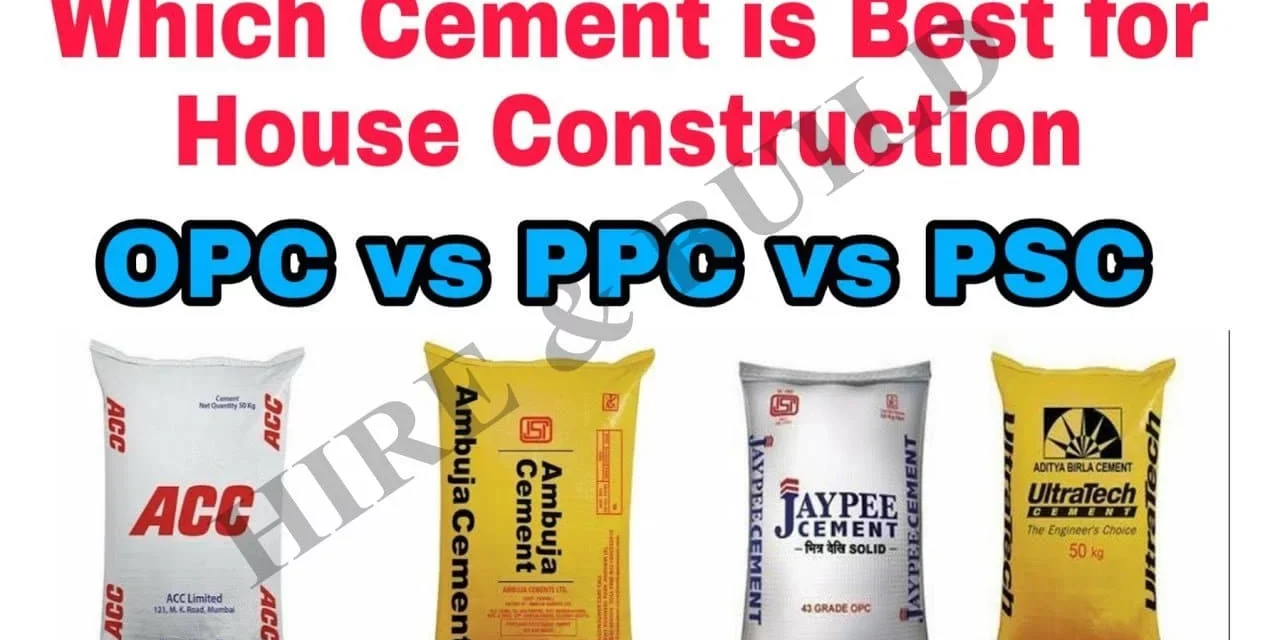
Best Cement for House Construction in Chennai (OPC vs PPC vs PSC Explained)
Choosing the wrong cement is one of the costliest mistakes you can make during house construction — and most homeowners don't realize it until the cracks appear. In Chennai, this decision carries even more weight. The city's coastal humidity, high temperatures, and chloride-rich air near the sea aggressively attack concrete that isn't built right from the start. A foundation laid with the wrong cement grade, or plastering done with a structural-grade binder, can set off a chain of problems — seepage, spalling, rebar corrosion — that no amount of repair work will fully fix later.
At HireandBuild, we've managed 100+ residential projects across Chennai — from Medavakkam to Mogappair, from sea-facing plots in ECR to inland sites in Ambattur — and we'll walk you through exactly what we use on-site and why. This guide is built on real construction experience, not textbook theory.
Which Cement is Best for House Construction in Chennai?
- OPC 53 Grade — Best for all structural work: columns, beams, slabs, and foundations. Fastest strength gain.
- PPC (Portland Pozzolana Cement) — Best for plastering, brick masonry, waterproofing, and all finishing work. Fewer cracks, better workability.
- PSC (Portland Slag Cement) — Best for coastal plots in Chennai (ECR, Adyar, Thiruvanmiyur). Superior chloride and sulfate resistance.
Types of Cement Used in House Construction
There are dozens of cement varieties available, but for residential construction in Chennai, three types cover 95% of all use cases. Here is how each one behaves on site:
1. Ordinary Portland Cement (OPC)
Best for: Structural RCC WorkOPC is the workhorse of structural construction. It gains strength fast — a slab cast with 53-grade OPC hits about 70% of its design strength within the first 7 days. That early strength gain is why site engineers prefer it wherever formwork needs to come down quickly to keep the schedule moving.
Where it's used on site:
- Columns, beams, and RCC slabs (primary structural use)
- Footings and raft foundations where early loading is expected
- Precast elements, lintels, and staircase risers
Grades available: 33, 43, and 53 (more on grades below)
The catch: OPC has a high heat of hydration. In Chennai's summer heat, this amplifies micro-cracking risk significantly if curing isn't done properly. A minimum of 14 days of continuous water curing is non-negotiable with OPC.
2. Portland Pozzolana Cement (PPC)
Best for: Plastering, Masonry & WaterproofingPPC is OPC blended with fly ash (a by-product of thermal power plants), typically in a 20–35% ratio. The fly ash slows down hydration — less heat, fewer early cracks, and better long-term durability in Chennai's aggressive moisture environment.
Where it's used on site:
- Plastering and wall finishing (strongly preferred over OPC)
- Brick and block masonry
- Waterproofing courses and terrace screeding
- Internal floor bedding and grouting
For plastering work in Chennai homes, PPC is the go-to. The lower water demand gives a smoother mix, shrinkage cracks are far rarer, and the surface bonds better with paint systems.
3. Portland Slag Cement (PSC)
Best for: Coastal & High-Moisture ZonesPSC replaces a portion of clinker with GGBS (Ground Granulated Blast furnace Slag). The result is exceptional resistance to chlorides, sulfates, and seawater attack — making it the correct specification for coastal construction in Chennai.
Where it's used on site:
- Foundations, columns, and slabs for plots within 1–2 km of the coastline
- Basement construction and underground water tanks
- Retaining walls near water bodies and drainage channels
Chennai-specific note: If you're building in ECR, Thiruvanmiyur, Foreshore Estate, or any plot close to the Buckingham Canal, PSC is not optional — it's the right specification. The long-term savings from avoiding rebar corrosion far outweigh the marginal cost difference.
OPC vs PPC vs PSC — Which Cement is Better?
When homeowners ask "which is better — OPC vs PPC?", the honest answer is: it depends on what stage of construction you're in. Here's a side-by-side comparison across the factors that matter most on a Chennai build:
| Parameter | OPC 53 Grade | PPC | PSC |
|---|---|---|---|
| Strength at 28 days | Highest | Moderate | Moderate |
| Long-term durability | Good | Better | Best |
| Heat of hydration | High | Low | Low |
| Crack resistance | Lower | Higher | Higher |
| Chemical resistance | Average | Good | Excellent |
| Chloride resistance | Low | Moderate | Very High |
| Workability | Average | High | High |
| Setting time | Faster | Slower | Slower |
| Ideal use | Structural RCC | Plastering, masonry | Coastal / underground |
| Approx. price/bag | ₹385–420 | ₹360–390 | ₹395–430 |
Which Cement is Best for House Construction in Chennai — Builder's Recommendation
If you want a direct, stage-by-stage answer for the best cement for house construction in Chennai, here it is — based on what we actually specify across our projects:
- Foundation and Plinth Beam: OPC 53 Grade. For plots with water table issues or saline soil — common in low-lying areas of Pallikaranai, Sholinganallur, or coastal zones — switch to PSC or use OPC with GGBS addition.
- Columns and Beams: OPC 53 Grade. Structural elements need to hit target strength on schedule. Don't compromise here.
- RCC Slabs: OPC 53 Grade with proper mix design (minimum M20 grade). Curing must begin within 12 hours of casting in Chennai's heat.
- Brick/Block Masonry: PPC. Better bonding, less cracking in mortar joints, and more economical for this application.
- Internal Plastering: PPC. Better workability, smoother finish, and shrinkage cracks are far less frequent.
- External Plastering: PPC with a waterproofing admixture. Chennai's monsoon exposure demands it.
- Near-Coastal Plots (within 1–2 km of sea): Shift the entire structural concrete to PSC. Chloride resistance is not optional in these zones.
Material selection decisions like these seem straightforward in a guide — but on an active site, with procurement pressures, supplier availability, and daily schedule demands, they get complicated fast. Having an experienced construction company in Chennai manage this process end-to-end is what keeps material quality consistent from foundation to finishing.
Cement Grades Explained — 33, 43, and 53 Grade
The grade of cement tells you one specific thing: the compressive strength (in MPa) the cement-concrete achieves after 28 days of curing. Here's how to read the grades practically:
| Grade | Strength at 28 Days | Where It's Used | Recommended? |
|---|---|---|---|
| 33 Grade | 33 MPa | Now practically obsolete for new construction | ❌ Avoid |
| 43 Grade | 43 MPa | Non-structural use: flooring screed, compound walls, garden paths | ✅ For non-structural only |
| 53 Grade | 53 MPa | All structural RCC work — columns, beams, slabs, foundations | ✅ Mandatory for structure |
Practical rule of thumb: For anything that holds load — use 53 Grade. For everything else — PPC (which doesn't follow the same grade system but is equivalent to roughly 43 Grade in early strength, with better long-term performance).
Also worth knowing: cement strength grades assume the correct water-cement ratio and proper curing. Adding extra water to make the mix easier to pour will reduce actual achieved strength by 20–30%, regardless of what grade is printed on the bag.
Best Cement Brands in India — Available and Tested in Chennai
All reputed brands listed here carry BIS (ISI) certification and are available through dealers across Chennai. Here's how they compare based on real site experience:
| Brand | Best For | Chennai Availability | Pricing (Relative) | Site Verdict |
|---|---|---|---|---|
| UltraTech | OPC 53 Grade structural work | Excellent — available citywide | Premium | Most consistent quality control; reliable for structural pours |
| Ramco | PPC plastering & masonry | Excellent — strong Tamil Nadu supply chain | Mid-range | Contractor favourite for finishing work; best local availability |
| ACC (Holcim) | OPC structural work | Good | Mid-range | Long track record in India; ACC Gold is a reliable structural choice |
| Dalmia | PSC for coastal zones | Good — growing presence in TN | Mid-range | Dalmia DSP is one of the better PSC options in Chennai |
| Chettinad | PPC general construction | Very Good — strong regional supply | Economy–Mid | Popular with local contractors; competitive pricing, BIS certified |
Cement Price in Chennai — 2026 Market Rates
Here's what you can expect to pay at retail in Chennai for current cement price per bag:
| Cement Type | Brand | Price per 50 kg Bag |
|---|---|---|
| OPC 53 Grade | UltraTech | ₹400–420 |
| OPC 53 Grade | Ramco | ₹385–405 |
| OPC 53 Grade | ACC | ₹390–410 |
| PPC | UltraTech | ₹370–390 |
| PPC | Ramco | ₹360–380 |
| PPC | Chettinad | ₹355–375 |
| PSC | Dalmia DSP | ₹395–415 |
Factors that affect what you'll actually pay:
- Purchase volume: Buying in bulk (100+ bags) typically gets you ₹10–20 off per bag from dealers. For a 1,500 sq ft house, you'll use approximately 600–800 bags total — meaningful savings if negotiated upfront.
- Dealer relationships: A good contractor will have dealer networks that offer better rates than walk-in pricing. This is one of the practical advantages of working with an experienced builder.
- Market fluctuations: Cement prices track clinker and coal costs. Prices can shift ₹20–30 per bag within a season. Lock in pricing for large quantities where possible.
- Transport: Add ₹15–25 per bag for delivery to your site from most dealers in Chennai.
How Much Cement is Required for a House in Chennai?
One of the most common questions homeowners ask before starting a build is how many bags of cement they'll need. Here's a practical estimate based on standard construction in Chennai (ground floor + one upper floor, standard grade):
| Built-up Area | Cement Required (Approx.) | Approx. Cost (at ₹390/bag avg) |
|---|---|---|
| 1,000 sq ft | 400–500 bags | ₹1.56–1.95 lakhs |
| 1,500 sq ft | 600–800 bags | ₹2.34–3.12 lakhs |
| 2,000 sq ft | 800–1,000 bags | ₹3.12–3.90 lakhs |
For a detailed, site-specific estimate factoring in your plot size, number of floors, and finish grade, use the free HireandBuild construction cost calculator. It gives you a material-level breakdown in minutes — no guesswork, no vague estimates.
Common Mistakes When Choosing Cement — What to Avoid
Having overseen 100+ construction projects across Chennai, we see the same errors repeatedly on sites where homeowners managed procurement independently:
- Using OPC for plastering. The most common mistake. OPC's rapid setting and high strength make it terrible for plaster — it shrinks, bonds poorly, and develops map-cracking within months. Always use PPC for plastering.
- Buying old stock. Cement has a shelf life of 3 months from manufacture. After that, it absorbs moisture and loses 20–30% of rated strength without any visible change. Check the manufacturing date. Refuse anything older than 60 days.
- Over-specifying brand, under-specifying freshness. Fresh stock from a certified mid-range brand outperforms 4-month-old premium brand cement every time. Freshness beats brand name for non-structural applications.
- Ignoring site location in selection. Using standard OPC 53 Grade on a coastal plot in ECR without accounting for chloride exposure is a long-term durability risk. The cost difference between OPC and PSC is minor — the repair bill is not.
- Inconsistent grade across the project. Mixing different cement types within the same concrete element creates variable setting times and inconsistent strength. Maintain consistency within each pour.
- Skipping curing. Adding the right cement and then under-curing wastes the strength you paid for. In Chennai's heat, this is not optional — it's structural.
Builder Tips — Practical Insights from 100+ Chennai Projects
These are the non-obvious things we've learned from years of active site management across Chennai's varied zones and soil types:
Storage Tips
Store cement bags on a raised wooden platform — never directly on the floor — and stack no more than 10 bags high. Cover with tarpaulin on all sides. Cement stored near ground-level ventilation gaps in Chennai's coastal humidity can degrade noticeably within 3–4 weeks. Use a FIFO (first in, first out) system — always use older bags before newer stock.
Mixing Tips
Stick to the water-cement ratio specified by your structural engineer. Adding extra water is the single most common on-site mistake and the biggest strength killer. For machine mixing, a standard M20 mix uses approximately 8 bags of cement : 0.42 m³ sand : 0.83 m³ aggregate with around 120 litres of water. Never mix by hand for structural elements — the result is inconsistent and weaker concrete.
When Brand Matters vs When It Doesn't
Brand matters most for:
- Structural pours — columns, beams, slabs. Stick to reputed ISI-marked brands here.
- Coastal zone construction where PSC specification is critical.
Brand matters less for:
- Masonry and plaster work — any certified, fresh local brand works just as well.
- Non-structural fills, screeds, and compound wall footings.
Curing — The Step Everyone Underestimates
Cement strength is realised through proper curing, not just by the grade on the bag. Columns and beams should be kept wet for a minimum of 14 days. Slabs should be water-ponded for 14–21 days. In Chennai's summer heat (April–June), missing this step costs you 20–25% of the strength you paid for — and no brand upgrade will recover that loss.
For more site-level guidance tailored to Chennai's construction conditions, read our house construction tips guide. And for aggregate selection — the other critical material decision in concrete mix design — see our coarse aggregate guide for Chennai construction.
Ready to build your house in Chennai? Get material specs and cost estimates handled by experts — not guesswork.
Explore Turnkey House Construction in Chennai Calculate Your Construction Cost — FreeBrought to you by HireandBuild — Chennai's trusted home construction partner.
Frequently Asked Questions (FAQs)
Use OPC 53 Grade for structural elements like columns, beams, and slabs, and PPC for plastering, brick masonry, and waterproofing. Most Chennai homes use both — OPC for the frame, PPC for the finish.
Not for all locations. PSC is specifically recommended for plots within 1–2 km of the coastline — ECR, Adyar, Thiruvanmiyur, Foreshore Estate — where chloride and sulfate exposure is high. For inland Chennai sites, OPC and PPC are sufficient.
As of current market rates, OPC 53 Grade costs approximately ₹385–420 per 50 kg bag and PPC costs ₹360–390 per bag, depending on brand and supplier. Bulk purchases and dealer relationships can reduce this by ₹10–20 per bag. Use our cost calculator for a full material budget estimate
Ramco, UltraTech, and ACC are the most consistently reliable brands available in Chennai. Ramco has the strongest local supply chain and is widely trusted by contractors for both structural and finishing work. All three carry BIS certification. Freshness of stock matters more than brand for non-structural applications.
Approximately 400–500 bags of cement are typically used for a single-storey G+0 structure of 1,000 sq ft, including foundation, structure, and finishing. This varies based on the structural design, number of floors, and finishing specifications. Get an accurate estimate using the HireandBuild cost calculator.